- Plan Your Visit
- Getting Around

Getting Around
Trains, buses, bikes and roads across South Wales, including the new Metro, the best value travel passes, and an honest answer on whether you actually need a car.
How to get around South Wales
South Wales is compact. You can cross the whole region in under two hours, which means you can base yourself in one place and reach most of it on a day trip. How you travel depends almost entirely on where you are going: the cities and the valleys are well served by rail, while the Gower, the Heritage Coast and most of the National Park really want a car.
Below you will find an honest answer on whether you need one, the train network and the best value tickets, the bus operators worth knowing, driving and parking, and the main walking and cycling routes.
Do you need a car in South Wales?
It depends entirely on where you are going, and it is worth being straight about this rather than pretending otherwise.
You do not need a car if you are staying in and travelling between Cardiff, Newport and Swansea, or exploring the valleys. The South Wales Main Line runs frequently between the three cities, the Core Valley Lines reach up into the valleys from Cardiff, and city bus networks are good. Barry Island, Penarth, Bridgend and Porthcawl are all reachable by train, and Tenby and Saundersfoot are both on the rail network too.
You probably do need a car for the Gower Peninsula, the Glamorgan Heritage Coast and most of Brecon Beacons National Park. Bus services reach parts of all three, but they are infrequent, particularly outside the summer season and on Sundays, and the beaches and walking spots you most want to reach are often the furthest from a stop. If the Gower or the mountains are the point of your trip, hire a car.
A middle option that works well for a lot of visitors: base yourself somewhere on the rail network, use trains for the cities and the coastal towns, and hire a car for one or two days to do the Gower and the National Park properly. It is cheaper than a car for the whole trip and saves you parking in Cardiff.
Explore by Train
Exploring South Wales by train is a convenient and scenic way to see the region, with the South Wales Mainline forming the backbone of your journey. Crossing the border from England the line runs west through Newport and Cardiff before reaching Swansea, connecting major towns and cities with fast, regular services. Trains operate frequently throughout the day, usually with over 60 trains per day between Newport and Swansea, making it easy for tourists to start their South Wales adventure.
Branch lines open up more local discoveries, running through picturesque valleys, coastal towns, and rural villages. The Vale of Glamorgan Line, for example, links Barry, Rhoose, and Llantwit Major, providing access to beaches, heritage sites, and charming villages. The Heart of Wales Line, starting at Swansea, heads north into the Brecon Beacons or west to Saundersfoot, Tenby, and beyond, offering scenic trips, beach days, and countryside walks. Regular services operate on these routes, making it easy for visitors to plan short excursions or full-day adventures.
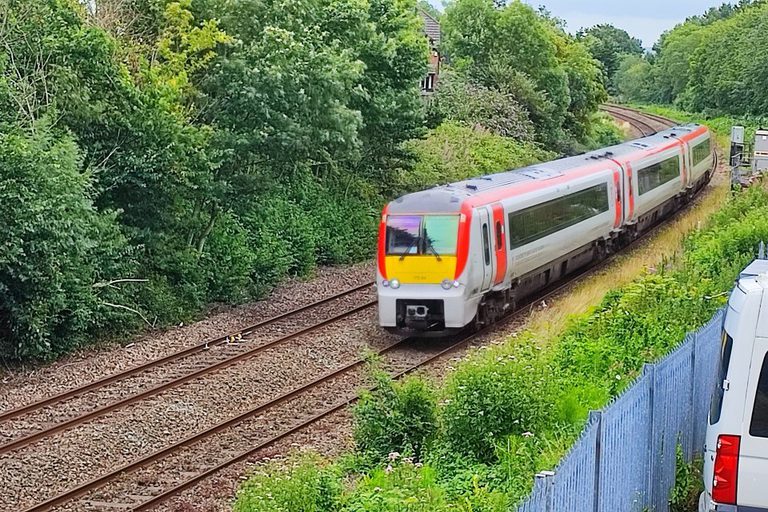
The South Wales Metro
The rail network across South East Wales has been through the largest upgrade in its history. In March 2026, Transport for Wales announced that electrification of the Core Valley Lines was 100% complete, finishing a project worth around £1 billion that installed more than 280 miles of overhead wiring across the network.
All seven Core Valley Lines are now electrified: Treherbert, Aberdare, Merthyr, Coryton, City, Rhymney and Cardiff Bay. New Class 398 tram-trains run on the Treherbert, Aberdare, Merthyr and Cardiff Bay lines, with Class 756 tri-mode trains on the Rhymney, Coryton, Penarth, Barry Island and Vale of Glamorgan routes.
For visitors, the practical effect is that getting from Cardiff up into the valleys, out to Barry Island or across to Cardiff Bay is quicker, quieter and more reliable than it was. Transport for Wales has reported the Core Valley Lines as one of the most punctual networks in Britain in recent months. Further signalling upgrades and the completion of the new fleet rollout are expected to bring faster journeys and higher frequencies still.
Train tickets and travel passes
If you are spending several days exploring by train, a pass will usually work out cheaper than buying individual tickets.
The Explore South Wales Pass gives you four days of rail travel within an eight-day period, plus bus travel on all eight days. It covers a broad area including all the Cardiff Valleys services, the Vale of Glamorgan and Maesteg lines, Ebbw Vale, Newport to Gloucester, and west to Pembroke Dock, Milford Haven and Fishguard Harbour. At the time of writing it costs £129 for an adult and £64.50 for a child, with further discounts available with a Railcard. Bus travel is valid with major operators including Cardiff Bus, First Cymru, Stagecoach South Wales and selected TrawsCymru services.
For anyone travelling more widely, the Explore Wales Pass covers the whole country on the same four-days-in-eight basis.
If you are only making one or two journeys, buying advance singles online is usually cheaper than turning up and buying at the station, and a Railcard pays for itself quickly if you qualify for one.
Getting around by bus and coach
Buses fill in most of the gaps the rail network leaves, and in some parts of the region they are the only public transport option.
The main operators across South Wales are Cardiff Bus in the capital, First Cymru around Swansea and the Gower, Stagecoach South Wales across the valleys and the south east, and Newport Bus in Newport. TrawsCymru runs the long-distance network connecting towns across Wales, including services that reach parts of the region the trains do not.
For visitors, the routes worth knowing are the Gower services from Swansea, which reach Mumbles, Langland, Caswell and out toward Rhossili, and the services running into Bannau Brycheiniog from Brecon and Merthyr Tydfil. Both are usable, but both run at a frequency designed around local need rather than day trippers, so check the timetable carefully and pay close attention to the last bus back. Sunday services are considerably thinner than weekday ones across the whole region.
Contactless card payment is accepted on buses across South Wales, and day tickets covering unlimited travel on a single operator’s network are generally the best value if you are making more than two journeys.

Driving and parking in South Wales
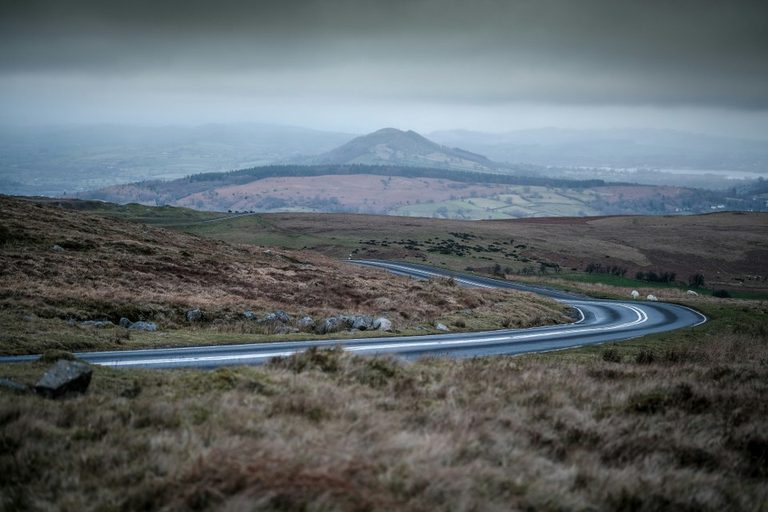
Driving in South Wales is straightforward. The M4 runs the length of the region from the Severn crossings past Newport and Cardiff to Swansea and on toward Carmarthen, and the A465 Heads of the Valleys road runs east to west along the northern edge. Away from the motorway the roads narrow quickly, particularly on the Gower and in the National Park, where you should expect single track sections with passing places.
One thing visitors from England should know: the default speed limit on restricted roads in Wales is 20mph rather than 30mph, following a change in the law in September 2023. Some roads have since been returned to 30mph by local authorities, so pay attention to the signs.
Parking is the main practical consideration. City centre parking in Cardiff and Swansea is plentiful but charged, and park-and-ride sites on the edges of both cities are cheaper and often quicker. At beaches and beauty spots, pay-and-display is the norm and the popular sites fill early on summer weekends. Phone signal at coastal and mountain car parks is often poor, so carry change even where an app is advertised.
Cycling and walking
South Wales has some outstanding traffic-free routes. The Taff Trail runs from Cardiff Bay north to Brecon, following the river and old railway lines through the valleys. It runs around 55 miles, mostly traffic-free, and is one of the best long-distance cycle routes in Britain. The Celtic Trail crosses the south of the country from the English border west to Fishguard.
On foot, the Wales Coast Path runs the entire length of the Welsh coastline, and the South Wales sections take in the Glamorgan Heritage Coast, the Gower and the Pembrokeshire coast around Tenby. You can walk between beaches, and in most places you can start and finish at a village with a bus stop or a station.
Bike hire is available in Cardiff, Swansea and several of the larger towns, and bikes can be carried on Transport for Wales trains, though space is limited and reservations are advisable on busier services.
Useful Links

Cardiff Airport
Cardiff Airport is the main gateway to South Wales, with flights from… Cardiff Airport is the main gateway to South Wales, with flights from cities like Amsterdam, Paris,…
View Details
Transport For Wales
Transport for Wales runs trains and buses across Wales and into England,… Transport for Wales runs trains and buses across Wales and into England, linking cities like…
View DetailsFrequently asked questions
- Do you need a car to get around South Wales?
Not always. You can travel comfortably between Cardiff, Newport and Swansea and up into the valleys by train, and coastal towns including Barry Island, Penarth, Porthcawl, Tenby and Saundersfoot are all on the rail network. But you will want a car for the Gower Peninsula, the Glamorgan Heritage Coast and most of Bannau Brycheiniog National Park, where bus services are infrequent, especially on Sundays and outside summer.
- What is the South Wales Metro?
The South Wales Metro is a roughly £1 billion transport upgrade centred on the Core Valley Lines running north from Cardiff. Transport for Wales confirmed in March 2026 that electrification was 100% complete across all seven lines (Treherbert, Aberdare, Merthyr, Coryton, City, Rhymney and Cardiff Bay), with new Class 398 tram-trains and Class 756 tri-mode trains now in service, delivering more reliable and eventually more frequent journeys.
- How do you get to the Gower Peninsula without a car?
Take a train to Swansea and continue by bus. First Cymru runs services from Swansea out along the Gower to Mumbles, Langland, Caswell and toward Rhossili. The services work, but they run at local frequencies rather than tourist ones, so check timetables carefully and note the last bus back. Sunday services are much thinner. For visiting several Gower beaches in a day, a car is considerably easier.
- What is the best value train ticket for exploring South Wales?
The Explore South Wales Pass is usually the best value for visitors spending several days in the region. It gives four days of rail travel within eight days plus bus travel on all eight days, covering the Cardiff Valleys lines, the Vale of Glamorgan, Ebbw Vale and west to Pembroke Dock and Fishguard. At the time of writing it costs £129 for an adult and £64.50 for a child, with Railcard discounts available.
- How do you get from Cardiff to Swansea?
Trains between Cardiff Central and Swansea take around an hour on the South Wales Main Line and run frequently throughout the day, operated by Great Western Railway and Transport for Wales. By road it is around forty miles on the M4, typically under an hour outside peak times. National Express and Flixbus also run coach services between the two cities.
- What is the speed limit in Wales?
The default speed limit on restricted roads in Wales is 20mph, following a change in the law in September 2023, rather than the 30mph that applies by default in England. Some roads have since been returned to 30mph by individual local authorities, so always follow the signs. Motorway and national speed limits are unchanged.
Stay up to date
Sign up for the South Wales Guide newsletter to receive inspiration in your inbox for days & nights out, offers, competitions, trip planning ideas, and plenty more!
